8 minute read
Is Freetrade worth it? A hands-on investing app review
TL;DR: key takeaways
A Freetrade review after 4 years: commission-free trading, the free ISA, real costs, and whether it beats Trading 212 and Hargreaves Lansdown for UK investors.
If you just need the link, you can get your Freetrade referral code here.
Affiliate disclosure: this post contains a Freetrade referral link. If you use it and deposit £50, both of us get a free share worth between £10 and £100. It doesn't change the price you pay or the service you receive.
I signed up to Freetrade in 2022 using a friend's referral code. The free share I received was in an agriculture company I'd never heard of. I held it out of curiosity and it went up about 40% over the next few months before I sold it. That was a lucky draw (most people get something closer to £10), but it got me onto the platform, and I've been using it since.
This review covers whether Freetrade is actually worth using in 2026, what it does well, where it falls short, and how it compares to the other UK investing apps that are fighting for the same customers.
Three things I'd tell you up front
- Commission-free trading is real, but FX fees add up. You pay nothing to buy or sell UK stocks. US stocks are also commission-free, but you pay a 0.99% foreign exchange fee on every trade. If you invest £5,000 in US stocks over a year, that's roughly £50 in FX costs.
- The free ISA is a genuine differentiator. Most competitors charge for a Stocks and Shares ISA (Hargreaves Lansdown charges £45/year on portfolios over £2 million, but has platform fees). Freetrade gives you one for free on the Basic plan. For long-term tax-free investing, that matters.
- The stock selection is good enough for most people, not all. Freetrade covers the FTSE 100, FTSE 250, S&P 500, popular ETFs, and investment trusts. If you want niche AIM stocks, international markets beyond the UK and US, or complex instruments like options, you'll need to look elsewhere.
If one of those three lines answers your question, you have what you came for. The rest of this post is the detail.
What Freetrade actually offers
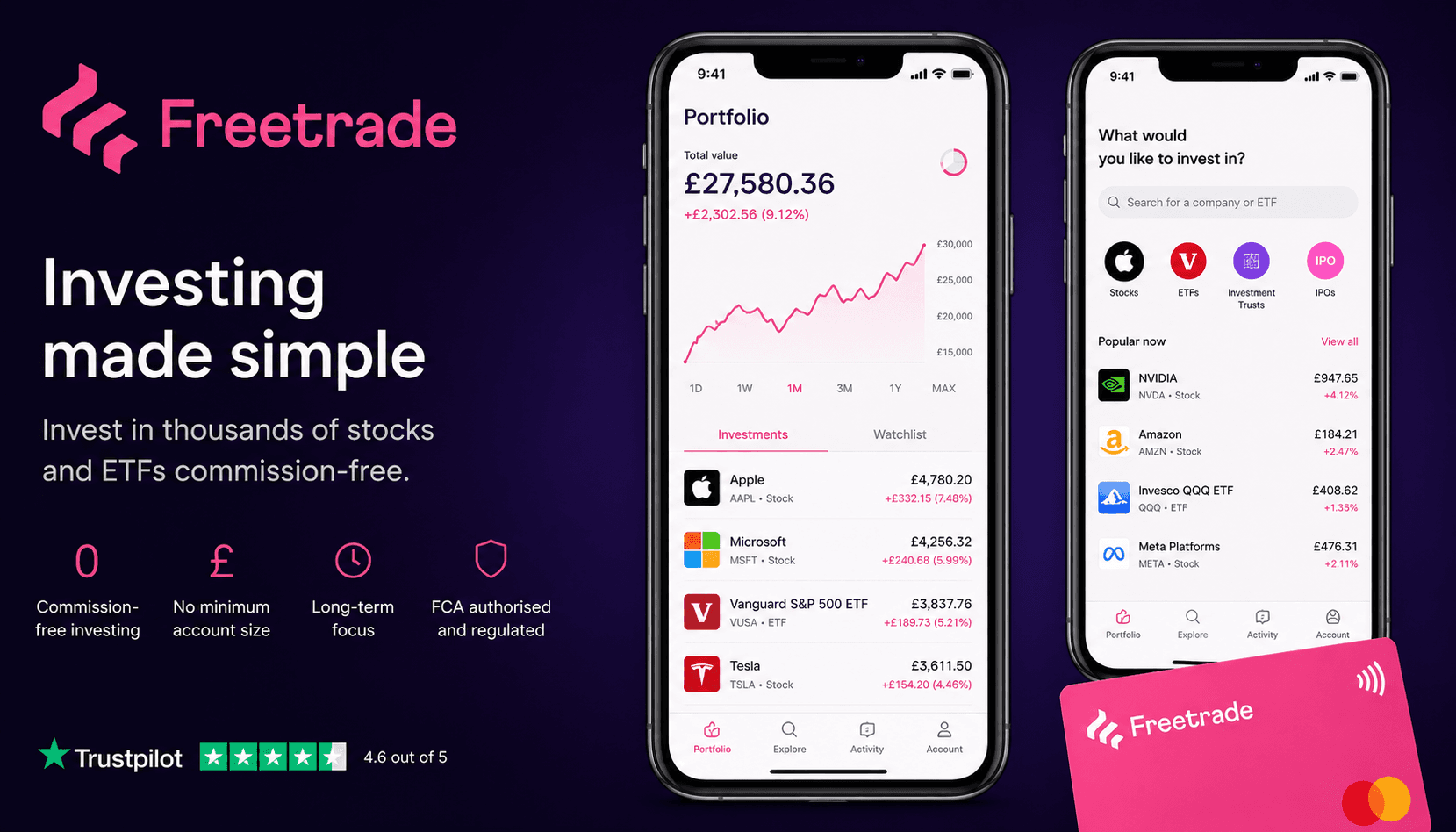
Freetrade is a UK stock trading app that lets you buy and sell shares without paying commission. It launched in 2018 and has built its reputation on simplicity: the app is deliberately stripped back compared to traditional brokers.
What you can invest in:
- UK stocks: FTSE 100, FTSE 250, and selected AIM companies
- US stocks: S&P 500 companies including Apple, Amazon, Tesla, Microsoft, Nvidia
- ETFs: index funds tracking global markets, sectors, and themes
- Investment trusts: including popular options like Scottish Mortgage and City of London
- Fractional shares: invest from as little as £2 in any stock
Account types available:
- General Investment Account (GIA): standard taxable account, free
- Stocks and Shares ISA: tax-free wrapper, free on Basic plan
- SIPP: personal pension for retirement investing
Freetrade is FCA-regulated, your uninvested cash is FSCS-protected up to £85,000, and the platform has been recommended by Which? for its value and simplicity.
Freetrade plans and pricing
Freetrade's pricing model has changed a few times since launch. As of 2026, there are two plans:
| Feature | Basic (free) | Plus (£4.99/month) |
|---|---|---|
| Commission on trades | Free | Free |
| Stocks and Shares ISA | Free | Free |
| SIPP | £11.99/month | Included |
| FX fee (US stocks) | 0.99% | 0.99% |
| Interest on uninvested cash | 1% AER | 5.2% AER |
| Priority customer support | No | Yes |
| Stock Universe access | Standard | Extended |
The Basic plan is genuinely free. No platform fee, no ISA fee, no commission. The only cost is the 0.99% FX fee on US stock trades, which is hard to avoid on any UK platform (though some competitors charge less; more on that below).
Plus at £4.99/month makes sense if you keep meaningful uninvested cash in your account (the jump from 1% to 5.2% AER pays for the subscription at around £1,200 in cash) or if you want priority support. The extended stock universe adds some smaller companies and newer listings.
The old Pro plan at £9.99/month is no longer available. It was discontinued in 2024 when Freetrade simplified its pricing. If you were on Pro, you were migrated to Plus.
What Freetrade does well
The app is clean. This sounds minor, but it matters when you're investing for the first time. There are no confusing menus, no CFD prompts, no margin trading nudges. You open the app, search for a stock, and buy it. Freetrade has resisted the temptation to bolt on complexity that serves active traders at the expense of everyone else.
The ISA is free. For long-term investors using their £20,000 annual ISA allowance, paying nothing to shelter your gains from tax is a real advantage. Over 10 years of investing, the ISA fee savings compared to a platform charging £100+/year are material.
Fractional shares work well. You can invest £2 in Amazon or £5 in Tesla. This is how most people should start: putting small amounts into diversified holdings rather than saving up for a full share of an expensive stock.
The referral programme is generous. A free share worth £10-£100 for depositing £50 is one of the better sign-up offers in UK investing. The expected value is skewed toward the £10 end, but it's still a guaranteed reward with no ongoing commitment.
Where Freetrade falls short
The FX fee is above average. At 0.99%, Freetrade charges more than Trading 212 (0.15%) and is roughly in line with Hargreaves Lansdown (1%). If you invest heavily in US stocks, the difference adds up. On £10,000 in US stock purchases, you'd pay £99 on Freetrade versus £15 on Trading 212.
The stock selection has gaps. If you want to invest in European stocks, Asian markets, or niche AIM-listed companies, Freetrade's universe may not cover what you need. The selection has grown significantly since launch, but it's still narrower than Trading 212 or any traditional broker.
Customer support can be slow. Outside of Plus subscribers with priority support, response times have drawn complaints on forums and Trustpilot. If you have an urgent account issue, waiting for an email reply is frustrating.
No advanced trading tools. There are no limit orders on the free plan (you get them on Plus), no advanced charting, no options, no short selling. If you're an active trader, Freetrade isn't built for you, and it doesn't pretend to be.
Trustpilot is 4.3/5. That's good but not exceptional. The main complaints centre on customer service speed and occasional app issues. The positive reviews consistently praise simplicity and the referral programme.
Freetrade vs Trading 212 vs Hargreaves Lansdown
These three represent the realistic choices for most UK investors. Here's how they compare on the things that actually matter:
| Feature | Freetrade | Trading 212 | Hargreaves Lansdown |
|---|---|---|---|
| Commission | Free | Free | £5.95+ per trade |
| ISA fee | Free | Free | Platform fee (0.45%, capped) |
| SIPP fee | £11.99/month (free on Plus) | Free | Platform fee (0.45%, capped at £200/yr) |
| FX fee (US stocks) | 0.99% | 0.15% | 1% |
| Stock selection | Good (~6,000) | Very good (~12,000) | Excellent (~15,000+) |
| Fractional shares | Yes (from £2) | Yes (from £1) | No |
| Referral reward | Free share (£10-£100) | Free share | None |
| Interest on cash | 1% (5.2% on Plus) | 5.1% | Varies by fund |
| Trustpilot | 4.3/5 | 4.6/5 | 4.4/5 |
| Which? recommended | Yes | No | Yes |
| Regulation | FCA | FCA | FCA |
Freetrade wins on: simplicity, free ISA with zero platform fee, clean design, Which? recommendation, generous referral bonus.
Trading 212 wins on: FX fees (significantly cheaper for US stocks), wider stock selection, higher interest on uninvested cash, more features for active traders.
Hargreaves Lansdown wins on: research and analysis tools, widest fund and stock selection, established reputation (founded 1981), comprehensive pension and retirement planning.
My take: for a beginner putting £50-£500/month into index funds and UK/US stocks, Freetrade or Trading 212 are the right choices. Freetrade if you want the cleanest experience and a free ISA. Trading 212 if you want lower US stock costs and a wider selection. Hargreaves Lansdown if you need professional-grade research or want a SIPP with broader fund access.
The referral: what you actually get
When you sign up through a Freetrade referral link and deposit £50, you receive a free share worth between £10 and £100. Here's what to know:
- The share is randomly selected from a pool of UK and US companies
- Most people receive a share closer to £10 (the distribution is weighted toward the lower end)
- You can sell the share immediately and withdraw the cash
- There's no ongoing commitment: you can close your account after claiming
- Both the person signing up and the referrer get a free share
My free share in 2022 was in an agriculture company worth about £11 at the time. It was one of the better outcomes because the company's share price happened to rise. But I'd set expectations at the £10-£15 range.
Freetrade FAQs
Is Freetrade safe?
Yes. Freetrade is authorised and regulated by the Financial Conduct Authority (FCA). Your uninvested cash is protected by the Financial Services Compensation Scheme (FSCS) up to £85,000. Your shares are held in a nominee account, which means they're segregated from Freetrade's own assets: if Freetrade went bust, your investments would still be yours.
Is Freetrade really free?
The Basic plan is genuinely free: no commission on UK or US stock trades, no ISA fee, no account maintenance fee. The main cost is a 0.99% foreign exchange fee on US stock trades. Freetrade Plus costs £4.99/month and adds features like higher interest on uninvested cash (currently 5.2% AER) and priority customer support.
What free share do you get with a Freetrade referral?
When you sign up through a referral link and deposit £50, you receive a randomly selected free share worth between £10 and £100. The share is chosen from a pool of UK and US listed companies. You can sell it immediately and withdraw the cash, or hold it in your portfolio.
Is Freetrade better than Trading 212?
It depends on what matters to you. Freetrade has a cleaner interface, a free Stocks and Shares ISA, and is Which? recommended. Trading 212 has a wider stock selection, lower FX fees (0.15% vs 0.99%), and a more feature-rich app. For beginners who want simplicity, Freetrade edges it. For active traders who want lower costs on US stocks, Trading 212 is stronger.
Can you lose money on Freetrade?
Yes. Freetrade is an investing platform, not a savings account. The value of your investments can go down as well as up, and you may get back less than you invest. This is true of any stock trading platform: the risk sits in the investments, not the app.
Who Freetrade is best for
Best for:
- Beginners who want a simple, no-commission way to start investing
- Long-term investors using the free Stocks and Shares ISA
- People who invest primarily in UK stocks, US blue chips, and ETFs
- Anyone who wants to invest small amounts regularly (fractional shares from £2)
- People who value a clean, distraction-free app over feature density
Less ideal for:
- Active traders who need advanced charting, limit orders (free plan), or options
- Heavy US stock investors who'd save significantly on FX fees elsewhere
- Investors who want access to European, Asian, or niche AIM markets
- Anyone who needs phone-based customer support
- People who already have a SIPP with a traditional broker (switching is a hassle)
The bottom line
Freetrade does one thing exceptionally well: it makes investing accessible. The free ISA, zero commissions, and fractional shares from £2 remove the three biggest barriers that stop people from starting. The app is clean, the platform is FCA-regulated and FSCS-protected, and the referral bonus gives you an immediate return on your first deposit.
The trade-offs are real. The 0.99% FX fee on US stocks is above average. The stock selection is narrower than competitors. Customer support can be slow. And if you're an experienced investor who wants research tools, limit orders on the free plan, and a deep fund range, Freetrade isn't trying to serve you.
For the majority of UK investors (particularly those starting out, investing in index funds, or building a long-term ISA portfolio) Freetrade is one of the best platforms available. It's where I'd point anyone who asked me "where should I start investing?" in 2026.
Get your free Freetrade share here -->
You might also like
Referral Plug founder · Personal finance writer and UK consumer savings specialist
I specialise in finding people the best deals to cope with the ever-increasing cost of living. I like to review companies from everyday industries like banking and energy and try to provide a fresh mix of facts and unbiased opinions.
Last verified: April 2026 · Last updated